Angela Sue Garvey on Church Hurt and Finding the Way Back | COMPASS in the Storm Ep 12
Angela Sue Garvey grew up in what she calls the soup of Christianity. Christian school, Christian college, a job at a Christian bookstore chain, a job at a church. So when her marriage turned abusive, she did what she had been taught to do and made an appointment with her pastor.
She brought photographs of her clean house, because her husband came home and berated her for the vacuum lines. The pastor held up his hand and would not look at them. He said there could be dust in the photos that would not show, and that really she needed to clean the house the way her husband needed it clean. On the way out he handed her husband a pamphlet on managing anger, without ever raising it in the room.
I have been in church ministry since my teens. I was a church secretary for years, my late husband and I pastored, and I have sat with people on both sides of this.
Most people who are hurt in the church never come back. Angela did, and this is how.
About Angela Sue Garvey
Angela Sue Garvey is a licensed marriage and family therapist associate, the founder of Life on Purpose School, a professional home organizer, and the author of Tiny Homes and Tummy Tucks.
What You’ll Hear In This Episode
- What was said in that office, and what Angela learned from it about who the church was protecting
- It took another seven to nine years before the hurt surfaced
- Jesus breadcrumbs, and who hers turned out to be
- Questioning is not backsliding, and the book on the stages of faith that gave her language for it
- Where deconstruction took her, and the sentence she landed on that brought her back
- Self-erasure, and why a judgmental comment made her assume she was the one who was wrong
- Her advice for church leaders, in four words, and her advice for anyone in the middle of it
Scripture In This Episode
Mark 14:50. All His disciples deserted Him and ran away.
Luke 23:34. Father, forgive them, for they do not know what they do.
Links Mentioned
- Life on Purpose School and Angela’s website
[CONFIRM] - Tiny Homes and Tummy Tucks on Amazon.
[CONFIRM]There is an audiobook too. Get both links. - Speaking enquiries
[CONFIRM]She says there is an events form on the site.
Full Transcript
Transcribed from the episode audio. Names, places, scripture references and medical terms have been corrected, and caption noise has been removed. Speaker names are not marked, because the source captions marked only that the speaker changed and not who was talking. Paragraph breaks follow those speaker changes.
I grew up in the soup of Christianity. But I found myself in an abusive marriage and in the position where I was sitting across from a pastor who told me to be more submissive in my abusive marriage. I just was very much struggling with if the church is like this, do I want to be a part of it?
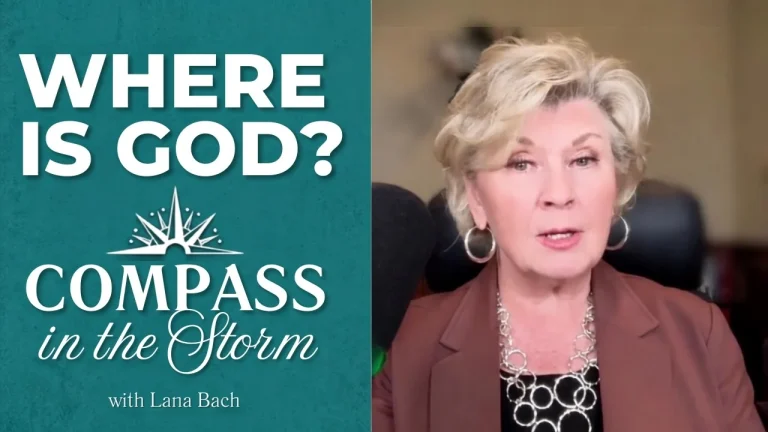
Have you stopped going to church because you experienced hurt by someone in your church? Have you grown bitter and cynical, even questioning your faith in God? My guest today endured all the pain and recovery associated with church hurt. And she’s here today to share how you can find healing and rebuild your faith after experiencing church hurt. You need to stay tuned. Hi, I’m Lana Bach, your host on COMPASS in the Storm, where we feature the stories of people who overcame lifealtering storms with God’s grace and now bring hope and encouragement to others. If you’re looking for powerful, uplifting stories that will strengthen your faith and offer hope and encouragement during life’s storms, be sure to click the subscribe button so you don’t miss our monthly podcast. My guest today is a licensed marriage and family therapist associate and the founder of Life on Purpose School. She is also a professional home organizer and the author of her book titled Tiny Homes and Tummy Tucks. She endured all the pain and the recovery associated with church hurt, but she’s here to share her journey of healing and rebuilding her faith. Please welcome my guest today, Angela Sue Garvey. And Angela, thank you for being with me today.
Thank you. Thank you so much, Lana, for having me. I’m so excited and I’ve listened to some of the interviews and I love the space that you are able to create for women who are in the storms.
Thank you. Thank you. I appreciate it. Angela, and you wear multiple hats. You’re a marriage and family therapist. You manage and direct the Life on Purpose School. You’re also a professional home organizer. Do you think you’re busy enough?
Yes, I Yes, I know. It’s a I can’t help it.
It’s a lot. I understand. But I’m so glad though, Angela, our paths, we crossed the ladies conference last year. but that’s when I had the opportunity to first hear your story and it was short but long enough to get to know you and your story. And although we are focusing today on church hurt, you have multiple facets to your powerful testimony which are all are in your book and we will talk about that later in the podcast. But Angela, your story is a story of pain, but also of determination. And one reason I wanted you to share your story here on COMPASS in the Storm is because since my teen years, I’ve been involved in church ministry. Still am. I was a secretary in a large church for years and I saw church hurts. being involved in multiple outreach ministries and churches throughout the years, I saw church hurts. And my late husband and I were pastors and have personally worked with people who have been hurt in the church, both men and women. And sometimes, and I’m going to say most the times, the hurt is inflicted by a brother or sister in the church, sometimes by a pastor. And the hurt can occur without the perpetrator even being aware of it. And it may have not been intentional, but I’ve learned this that people who have been hurt in the church sometimes never recover. But you did, Angela. Thank the Lord you did. And Angela, hurt you experienced in the church began a spiritual crisis in your life. You became bitter and cynical and even questioned your place with God. Would you please share about that season in your life and the series of events that caused you to grow bitter toward the church and feeling displaced in God?
Yeah. My story my testimony, you know, I grew up I grew up in the soup of Christianity. So I went to Christian Christian church. I went to my high school, Christian high school, Christian college. I worked for a while at Berean Christian Stores. It was one of the largest Christian bookstore chains. worked there for a few years. and worked at a church and I was so in the mix of the subculture of Christianity and I had gotten married and we’ll get around more to it, but I found myself in an abusive marriage and in the position where I was sitting across from a pastor who told me to be more submissive in my abusive marriage. And I found myself there. I got married young and when you are told when you grow up in the church and your marriage is in trouble or you need help, you go to your pastor. That’s where you’re supposed to go. They the leader of the flock and you know that’s where you go for guidance. And so it was getting so bad that we had made an appointment and I found myself sitting in this office on these ugly green wool chairs. I just remember that. And I’m sitting across from this pastor and I’m trying to describe the what I was experiencing at home. And I remember he just said, you know, if you have faith, God will work it out. I was so just emotionally beaten down in the marriage. And for people who’ve experienced abuse, they might understand this, but you get to the point where you’re questioning your own reality when you’re told that you’re wrong or it’s just you. And so my story, my ex would come home and he’d say, “Well, what did you do all day? Where are where’s the vacuum lines? Why is the house such a mess?” And it was the point where my house was so clean. And I remember feeling crazy and I grabbed a camera and I’m like a lunatic. I’m snapping pictures in my house. And this is when you actually like had a camera, right? Not just on your phone. So I like I printed them out like at a photo print center and I took the printed photos into this appointment with the pastor
and I said, “Please, can you just look at these photos cuz like he’ll come home and just berate me for the house not being clean. Please just look at them.” And I remember the pastor, he held up his hand and he said, “I can’t look at those because there could be dust in those photos and it wouldn’t show. and really you need to be cleaning the house the way your husband needs the house to be clean.”
Wow.
and this was not a small denomination. This is a very well-known church denomination. well I just I didn’t expect that and it was so like shaming and just an immediate cut off. He never addressed the anger issues and as we were leaving he literally just handed him a pamphlet that said how to manage your anger. He didn’t even bring it up in
in this the session. And so what I got out what I learned was the church is not protecting me. I’m not safe here in this space. And you know, in the church, it’s unless there is adultery. and not every church, but in this specific, it was unless you’re being cheated on, the process is that you separate. If it’s really, really bad and you’re in danger, you separate, you find healing, and then you reconcile. And so I just learned that not only did the church not recognize or condemn abuse, but it furthered the abuse by using words like submissiveness.
Right. Right. So what when you heard those words, I know you had to be hurt and angry, a lot of emotions going through. What was your next step? In your book, you talk about that you went through a divorce, but how did that trigger that spiral down? Like how was it a gradual thing that happened that you eventually just stopped going to church or did it happen like right away you’re like, “Okay, that does it. I’m not I’m not going back.”
Yeah. So, I it wasn’t like that. I stayed in church I for years. And so after I got the marriage and I knew that if I didn’t get out of the marriage, I wasn’t going to survive it. em emotionally I was just,
you know, really beaten down. And so I got out and two years later I met my husband, my second husband. and he is so great and kind and he gets uncomfortable when I say this, but the way that he has loved me and approached the marriage, it really is probably the first time where I’ve experienced what being loved like Jesus would be like.
just this ability to completely love me even when I’m not perfect and just I it’s just been so great. But I before we got married, I had done a lot of healing in the two years between my divorce. I had read a lot of books and but you can only go so far on your own. And so once I got married, it really exposed to me how hypervigilant I was. I was constantly walking on eggshells when I didn’t need to be and realizing how much of my behavior had changed to accommodate the abuse from before. and at the same time sitting in a church service. and this was different churches because we moved around. and then hearing it was the pastors talking about marriage. It was just very when that topic would come up, it would just make me really question even though we were at a healthier church at this point. And so it was probably around 2015 to 2017. So that would be seven, eight, nine years after my divorce that it really started hitting me
when I was processing that.
Honest. Sometimes when people have church hurt, they just leave and they don’t come back. I mean, I’ve seen it happen. And but in your case, it seems like you just kind of it was an internal thing that was going on. And you may not have left the church physically, but like emotionally, spiritually, you’re kind of having some changes going on. And even though you change churches, every church is going to have its issues because like my husband always said, there are no perfect churches because there are no perfect people. But and we have to expect that. But what you went through, I mean, I can’t even imagine in my mind as a pastor’s wife or all the times I’ve ever worked in churches or professional counseling that they would even say to endure it. I mean, apparently whoever that person was, that pastor, he needed to get some training himself, but evangelist. So, you eventually remarried and your husband is an second husband’s an awesome person. And it’s you said that you carried spiritual baggage into that second marriage. So could you please share a little about the baggage, how it affected your marriage and what helped you work out those baggage issues? How did you unpack that baggage that you I mean I’m sure it took a while. It doesn’t happen overnight. But how did that happen?
Yeah. So part of the baggage was within the context of the marriage. Like I said, I was very hypervigilant to try to make sure things were perfect, you know, so I wouldn’t upset him, which he never got upset. Like when I when I met my husband and I went to his house for the first time, I thought I even teased him like, “Did the rapture happen here?” Cuz there was just piles of clothes everywhere. like people just, you know, he wasn’t but I and I knew he wasn’t like that, but it’s just, you know, your body it imprints in your body that response to it. and so I was I kept money in the bank like in case I needed to leave, you know, I always had enough for a plane ticket away
for a while. And so that was hyper vigilant within the marriage. And then with the church, I think I was very hypervigilant during sermons. If a pastor said something, I was like looking it up or, you know, if I wasn’t in that zone, I would just completely turn it off.
Right. Right.
And not take it in.
Right. Right. And I think everyone everyone carries baggage in their lives and of different sorts. Some are carry-on, some are checkin, some are freight size. But no matter what the size of that baggage is, recognizing that we have baggage is actually the first step towards unpacking it. So that’s why it’s so nice to hear you say that, you know, you realized that you went into his house. It’s like, oh my gosh, it doesn’t have vacuum marks, you know. Yeah. So I and again I asked this next question because I am sure someone is listening who has been hurt by the church and they just can’t seem to find the path back. And I know the Lord helps us through the storms. And with that being said, what would you say, Angela, was your compass during this stormy decade of your life? That one thing that helped you most survive that stormy season? I think that for me I never questioned does God exist? I was more hurt by the pe the people who were following who you know the church members and the judgment that I received after and the thing that really held me held me in because I think if I didn’t have I call them Jesus breadcrumbs I along my path there have been breadcrumbs along the way there have been strong women who have come into my life Christian women. there have been just placements of people. I had a great Christian therapist and I just and so Jesus breadcrumbs along the way to really hold me in. And I think that was what kept me because I knew that God loved me and that he was real.
I just was very much struggling with if the church is like this, do I want to be a part of it? Another thing and I know you asked for one compass. Yeah. It was understanding the process of the stages of faith. So there’s a book by James Fowler where he talks about the stages of faith and the process that people go through when they start doubting and questioning. And I realized like that questioning in the churches is called backsliding often times. And so I had to realize that questioning is not backsliding. It’s just a place to be. It’s not good or bad. And it’s still part of the faith. But when you get labeled as backsliding, there’s a lot of shame that goes along with that, too.
Yeah. So true. So true. And I wanted to make a point too with your when you were talking about you had strong women that came in and really helped you. You know, it’s so funny. We never know what somebody’s going through in the church. And you know, if you look back, those ladies probably were such core support for you. The people that were there that didn’t judge you, that still came and you know, upgraded you. so, it’s so important for those that are even listening to know that, you know, sometimes we may look at someone in the church and say, you know, they’re backsider. Well, we have no idea what they’re going through. And that’s I believe why the Lord says, you know, be careful how you judge somebody because however you judge someone else is exactly the ruler he’s going to use to judge you. So, and one more thing I want to say about the book you were talking about which sounds so very interesting is I remember in your book you wrote the I think was one of the last chapters at least in your second edition. I think I had the second I don’t think I had the first but you said something about why the question so why do I go to church? you actually found the answer to that where some people sit in the church pew and I don’t think they even know why they’re there. So, I’m very thankful that you know that you’re being so honest in how you’re you know walking your way back and hindsight is always easier than foresight. But what question crossed my mind is looking back, Angela, is there anything you would do differently now than when you sat across from the pastor years ago on those green ugly chairs?
Yeah. So my inclination in how to answer what I would do differently, my first instinct as probably just a woman but maybe somebody who has left an abusive relationship is to give the pastor a pass and to be generous for him to him and to say I just in my head I’ll start making up all these well you know he may maybe I didn’t explain myself enough to him maybe I didn’t do this right in the situation. I wasn’t perfect in the marriage. The truth is the church didn’t protect or recognize abuse in that marriage. And not only were they not trained to recognize abuse, they further the abuse by using words like submissiveness. So my instinct is to soften it. But I really need to hold strong on that. Mhm.
But that said, I don’t know. It’s it’s a hard thing to think what I would actually do differently. I think the thing that I would do differently is not walk into a church office for that type of situation, you know, for abuse.
Yes. Okay, I gotcha. Yeah, that is very good advice because honestly I don’t I don’t think I don’t and I’m not downplaying the role of a pastor but I even know when I u when my first husband had div filed for divorce for me and I became suicidal. I mean, in my first book, I talk about that, but I had to seek counseling. And my pastor that I was the church I was attending at the time, he had enough wisdom to say to me, Lana, I don’t think I’m qualified to, you know, counsel you on this. You need to find a prof find a Christian professional. And I am so thankful and I and I that is such good advice, Angela. Such good. And and although we love our pastors and they can advise us in so many spiritual things, I think you’re right. There’s certain things that a wise pastor would just say, you know, I think we need to go to a little professional level here that maybe I’m not able to do. So, excellent word. And and so with all of this experience even even knowing that which is a huge thing to know is what is the most important thing and maybe that was the most important thing that you learned from your journey of pain and restoration.
I think the most important thing when I think back about my process through the marriage that was just part of it. the bigger thing for me with the church after the pastor did what he did and I will say when I stepped into his office with my ex at the time, he already probably made up his mind how he was going to respond to me, you know. but then after that it the people that hurt me the most were the peop so there were a lot of strong Christian women who had come alongside me but there was a lot of people who I was already in contact with who were very judgmental
and would make comments that they didn’t believe that this divorce was biblical or just there was so many opinions about it and when I started questioning the faith there was a term and it’s more common now, but it wasn’t as common then and it’s called deconstruction.
And so when I started questioning, I found that word that wasn’t very common. And I thought, okay, I’m deconstructing.
Well, over the years, that word has become like a four-letter word in Christianity. And if you say it, a lot of people really, you know, if a lot of Christians, they don’t like that word. And so it’s an immediate you can immediately read their face if they approve or if they don’t. And so that word is really really hard to use now. But and it means something different for everybody. Some people it means questioning their theology. Some people it means questioning like politics, you know, and so it’s really tricky. You have to clarify what people mean when they say it. But when I found that path, when I started going down deconstruction, I found one teacher who led me to the next teacher who led me to the next teacher. I got pulled more and more into this progressive version of Christianity that kept saying, “You’re enough. You’re enough.” And I really wanted to believe that. And I tried so hard to internalize it and to feel like I was enough. But no matter what I did, it just I just didn’t feel like the void was filled. like there just was a hole there. And then through a couple of different things that happened, I had this realization like the progressive Christianity had pulled me so far to where it was the absence of the need of Christ. So the entire message of Christianity is that we’re enough for God’s grace. But that hole, that void can only be filled by Christ. And if you’re trying to believe that you’re enough, it’s never going to really feel real.
So for me, the most important thing that I learned from that message is you’re enough for God’s grace, but we need Christ to be complete.
Amen. Amen. That is so good. When it comes to the people who were judgmental during that such hard time of your life, did you ever have to go back and say, “Lord, help me know what to do with this anger, this hurt from these people, like did the message of forgiveness, did the Lord ever put that message there for you? Like did you feel like, okay, I could just leave the church and that’s their problem?” Or did the forgiveness not even maybe that wasn’t even an issue because you were so much trying to figure out what’s going on inside of you. but did the message of forgiveness ever come to you from the not from others but I’m saying from the Lord? How did he ask you to deal with the people? Because this is something that people who are hurt in the church may not know what to do with. Am I supposed to forgive those people? because sometimes and again this is one of the biggest messages of forgiveness is that a lot of times we forgive not for the sake of the person who hurt us but for our own sake and forgiveness doesn’t mean you’re condoning what they did nor do you have to go back into the same circle of hurt. But that’s why I was wondering how did you handle the people that were around you that you felt their judgment or was it just not something that you could just maybe the kind of person that didn’t bother you?
Yeah. No, I mean it bothered it bothered me enough to that’s I wrote the book you like it took me a long time to process it. But I think there was I’ll talk out of both sides of my mouth here. I think part of me when because I was so in this I call it the soup of Christianity. I was so involved. I completely understood where they were coming from cuz I had been that person.
And so I think there was a level of compassion I had for people cuz I’m like, “Yeah, I probably would have done that too a few years ago, right, if I hadn’t experienced that.” And I see it now, too. I see women who are they can be harsh towards certain topics and for me it’s kind of a sign that maybe their their way that they’re harsh or or extra judgmental is probably an area that they have not received forgiveness or freedom in.
Exactly. Ex that is so key. That is so key. And again, you know, you’re you know, you’re going through you went through something that a lot of Christians, you know, have no idea because, you know, when you’re hurt in the church, a severe hurt, it changes your life. you know, I there’s some experiences that, you know, Steve and I have had to deal with and it could have changed our lives like like with you. you could have chosen not to make that journey back to the Lord and embrace where God has you. But so thankful you did. So good advice, Angela. And is there anything that you would say to someone who is watching who has been hurt by the church, they become bitter and just cynical and now they don’t even want to darken the doors of another church. maybe they haven’t even opened up the idea of walking back that direction. Is there anything you could say to that person?
Yes. I will say and I’ll answer that question. I’m going to go back just half a step if that’s okay.
Yeah. Yeah. the one of the reasons and this will feed into this but that when I looked at other Christians as somebody who’s been hurt and I know a lot of women struggle with this I came across a term that I think describes it really well. It’s called self-erasure.
Oh yeah.
And it’s when you learn to minimize or suppress or abandon parts of yourself in order to maintain an unhealthy relationship connection. And so because I was such in a habit of self-erasing and not connected to my identity in Christ, because I was in such a habit of doing that, when somebody was judgmental towards me, my automatic assumption is I’m wrong,
not them. And so I really struggled with that. And I so to answer your question to both the people who are experiencing a lot of women today in the church leaders too, they’re experiencing people who are saying that they’re deconstructing.
My advice to them and this is something that I and I think I might have mentioned this to you when I talk. I don’t like talking about deconstruction because of the judgment that comes when you talk about it. you can read. People who are familiar with it are very uncomfortable if you say that you’ve deconstructed. and so my message to the women hearing people who are hurt is to if somebody says they’re deconstructing to ask them what they mean by that
because it might mean something completely different than what you’re assuming that it means. And maybe for them it is they’re deconstructing the political side of what they were raised with within the church. For other people it might be they’re deconstructing women’s roles in the church or submissiveness. and so it really is important to get clear on that. And the second thing is that as Christians we are we should have I say prayer and a poker face that we should be praying for the person who’s in front of us and it’s not that their salvation depends on us but that we are praying for them and not making any sort of face not making not making a win tonight because when somebody has been hurt and they’ve experienced exper or or just church hurt. They are going to read every expression on your face and feel that judgment.
And we are called to be emotionally intelligent enough
when we’re to respond to what they need in that moment.
Exactly. Exactly.
So, exactly.
Yeah. That’s my message towards people who who might not understand deconstruction. For people who are deconstructing, I would say to really really find somebody safe to speak with about the process and what that looks like for you. Find people who are not angry and bitter. the stages of faith was a great resource for me because what I had realized is that often times when you are hurt and you’re going to search for something, you end up finding that same thing under a different name.
Yeah.
So, people will leave this denomination for this other denomination and it might be the same like level of legalism. That’s the word I was looking for, right? you know, you’re you’re trying to leave legalism and then you find legalism just under a progressive umbrella or or something like that. So, it’s really finding finding somebody who’s safe and then recognizing are you just trading out one toxic theology for another.
Right. Right. That’s good. That is all good advice, Angela. Lessons learned from experience. And I like the fact that you said find someone who’s not angry. gives a different perspective. All just such great advice. And you know what also is I feel this advice that you’re giving is not just with people who have had church hurts but hurts really of any kind. you know, I mean, you can apply it to people who’ve been hurt. Like you said, if you’ve been hurt in a marriage, whatever it is, it’s just excellent advice. And thank you, Angela, for sharing your journey and your encouraging words and how you made the walk back to, you know, healing and faith in God. Your pain was not for nothing. you experienced something again that is hard for most Christians to relate to. but I’m so thankful for your open heart and life and now you have a ministry that helps other women through painful experiences. Would you like to share about your therapy services and your life coaching?
Yes, thank you. So throughout this whole process, I have dug deep into so many resources and it led me on the path to become a licensed therapist myself. So, I opened Life on Purpose School to help people going through hard hard times through trauma, abuse, or or just dealing with high anxiety or toxic relationships. And so, Life on Purpose School offers therapy for Washington State residents right now. And I also offer coaching. And the coaching is for people who might have been in therapy, who don’t need a mental health diagnosis, but might want to dive into some of the work. And right now, I’m really focusing on self-erasure. And when we minimize, suppress, or abandon parts of ourselves in order to maintain a connection with somebody,
so they can contact you for more information at your website, angelasue.com, correct?
angelasue.com. And I will put that in the podcast. So that’ll be there for people. if they’d like to contact you. I think that’s excellent. Just awesome services and opportunity. Now, also, would you like to share about your book? I love the title, Tiny Homes and Tummy Tucks, as well as your home organizing business.
Thank you so much. So, Tiny, I wrote a book. It’s called Tiny Homes and Tummy Tucks.
Says a lot from the title. My kids are like, “Mom, you wrote a book. What’s a tummy tuck?” Like, okay. yes. So, I got tiny homes and tummy talks. It’s a spiritual downsizing and I wrote it to talk about the process of leaving an abusive marriage and my spiral from I felt like the red-headed stepchild of Christianity and just like there was a piece that I was missing. I wrote it through my entire deconstruction experience and then I actually had come out with a part two once I had realized where I was within abandoning the message of our need for Christ in the message. So I have part two there which is in the book and you can get that on Amazon. There’s an audio book too.
Great. So, it is it is available on Amazon as well as on your website, correct? angelasue.com.
For those event planners that are watching or anyone that would like to schedule you for a speaking event, Angela, they can also contact you at angelasue.com. Correct.
Yes, that’s right. There’s a form on my website for events.
Great. Wonderful. Wonderful. And Angela, thank you again for taking the time to share your journey with us today. You’re making a difference in the lives of many women. I pray the Lord blesses you, your family, and your ministry as you help women rebuild their lives and their faith. And thank you. Thank you so much for being with me today. I appreciate it.
Thank you so much for having me, Lana. And thank you. Thank you for creating this space for women who really need to find the compass or to hold on to it.
Thank you. Thank you for joining me today on COMPASS in the Storm. I hope you received hope and encouragement for your journey. Friend, if you’ve experienced any kind of hurt, whether in the church or by someone you totally trusted, know this. You are not alone in that pain. Jesus was betrayed by his own friend and ministry partner, Judas. And not one disciple stood by his side when he was arrested in the garden. The Bible tells us in Mark 14 that all his disciples deserted him and ran away. They left him. Can you imagine in the time of your greatest need? But Jesus, even in his pain on the cross, cried out to God and asked him to forgive them for they do not know what they do. Friends, sometimes the hurt we experience is not intended. And the person who hurt you may not even be aware of your pain. Either way, the key is to forgive. When you forgive the person who hurt you, they no longer can cause pain in your heart. Forgiving doesn’t mean you are condoning the pain they inflicted on you. Nor does it mean you need to go back and take more of the pain they wish to dish out. Forgiveness is a process that you must make a decision to do over and over again until one day you finally realize that the hurt of that person is no longer affecting your life. That is a great day in the life of anyone who has been wounded by someone. You will feel freedom and peace as a result of forgiveness. One last thing to remember about forgiveness. The Bible doesn’t say that you should expect that person you’re forgiving to be repentant. In fact, some may not care that they hurt you. So, forgiving is not for them. Forgiving is for you to set you free. I pray that you’ll seek freedom from any pain that resulted from hurt. make the decision to forgive that person and it will set you free. I’d like to say a prayer with you that will help you take the first steps in forgiving that person who wounded you. Lord, I pray today that you would help each listener who is hurting from a wounded heart to be obedient to you and say the words, “I forgive them.” May healing begin in their heart. May their spirit be set free each time they say those words, seeking to do what you have instructed us to do in your word. Forgive Lord. Help each of us to seek a clean heart. And may we always seek to draw close to you. We ask all of this in Jesus’ name. Amen. Thank you for listening, friend. Have a blessed week. See you next time. And remember, stay the course.

Stay the course!